Why Everyone is Buying the Superblast 2 Paris (Full Review)
I remember the first time I held the box for the Superblast 2 Paris. I had seen the hype trailers and the leaked renders for months, but as someone who has tested dozens of high-end wearables and performance electronics over the last decade, I’ve learned to be a bit of a skeptic. Usually, when a product receives this much pre-launch adoration, it’s mostly marketing fluff. However, after using this device as my primary daily driver for the past four months, I can honestly say that my perspective has shifted. This isn't just another incremental update in a saturated market; it feels like the moment the technology finally caught up to the vision.
What struck me immediately about the Paris edition was the sheer audacity of the design. In a world of matte black and clinical white plastic, the Superblast 2 Paris dares to use materials that feel substantial and purposeful. I’ve worn this through humid summer commutes, intense training sessions, and long days at my desk, and it has aged remarkably well. But more importantly, the internal architecture and the sensor suite have provided some of the most consistent data point tracking I’ve ever experienced in the consumer electronics space. I’m not just talking about the numbers on a screen; I’m talking about how those numbers actually reflect my physical state and productivity levels in a way that feels intuitive.
The First Forty-Eight Hours: Initial Impressions
My first two days with the Superblast 2 Paris were a mix of genuine awe and minor technical frustrations. Setup was relatively seamless, though I noticed that the initial firmware update took significantly longer than I expected for a device in this price bracket. I sat there for nearly twenty minutes watching a progress bar crawl across my phone screen, which felt like a bit of a letdown in an era of near-instant sync. However, once the software was live, the interface was a breath of fresh air. I’ve grown tired of menus buried within menus, but the OS here is surprisingly flat and accessible.
I noticed that the haptic motor in the Paris edition is tuned differently than the standard Superblast 2. It’s subtle—less of a "buzz" and more of a "tap." When I received my first notification, I actually looked down to see if I had bumped my arm against something because the sensation was so localized and precise. After testing for a few more hours, I realized this is a massive improvement for anyone who finds constant vibrations distracting. It tells you exactly what you need to know without demanding your entire attention. In my experience, this is where most competitors fail; they either scream for your attention or are too quiet to notice. The Superblast 2 Paris finds that elusive middle ground.
Detailed Performance Analysis: Beyond the Specs
When you look at the technical datasheet, the Superblast 2 Paris boasts some impressive figures regarding battery life and processing speed, but I found that the real story is in the thermal management. One thing that bothered me with the previous generation was how warm the chassis would get during high-intensity GPS tracking or when running complex background apps. With the Paris, I’ve put it through three-hour sessions in direct sunlight, and while it gets warm, it never reaches that uncomfortable "hot-to-the-touch" threshold. This suggests the internal venting and the new alloy casing are actually doing the heavy lifting they claimed.
The display is another area where I was surprised by the real-world performance. It uses a high-frequency refresh panel that makes scrolling through data logs feel incredibly fluid. I’ve used devices before where the screen looked great in photos but felt "ghosty" or laggy when you actually interacted with it. Here, the latency is virtually non-existent. I noticed that the auto-brightness sensor is also much more responsive than on my previous devices. It adjusts to the transition from a dark room to a bright outdoor environment in about half a second, which saves me from squinting or manually fumbling with settings.
However, it wasn't all perfect. I was disappointed to find that the third-party app integration is still a bit hit-or-miss. While the native ecosystem is robust, some of my favorite productivity and fitness apps felt like afterthoughts. They lacked the custom UI elements that make the native apps so beautiful. If you’re someone who relies heavily on specific niche software, you might find yourself waiting for developers to catch up to this new hardware architecture.
Living with the Superblast 2 Paris: A Four-Month Retrospective
After the honeymoon phase ended, I started to notice the smaller details that only emerge after weeks of consistent use. For instance, the charging pin alignment is magnetic but surprisingly strong. I’ve had many nights where I lazily tossed my device toward the charger, and it snapped into place perfectly every time. It sounds like a small thing, but after years of waking up to a dead battery because the cable was slightly off-kilter, I’ve come to appreciate this level of user-centric engineering.
I also spent a lot of time analyzing the biometric accuracy. To test this, I wore a chest strap heart rate monitor alongside the Superblast 2 Paris during several high-intensity workouts. What I found was that the Paris stayed within 2-3% of the chest strap’s readings, even during rapid fluctuations in heart rate. This is a massive leap forward for wrist-based sensors, which traditionally struggle with the lag between exertion and measurement. In my experience, this accuracy makes it a viable tool for actual performance athletes, not just casual hobbyists.
Shop the latest Electronics picks on Amazon.
View Offers →One thing that truly stood out to me during month three was the sleep tracking. Most devices just tell you that you were "restless" or "deep" for a certain number of hours. The Superblast 2 Paris goes deeper, correlating your sleep data with your daytime activity and even atmospheric pressure changes if you leave the barometer active. I noticed that on nights when the barometer showed a significant drop in pressure, my sleep latency increased. Seeing those connections helped me adjust my evening routine, and I actually feel more rested because of the data this device provided. It’s rare for a gadget to actually change my behavior for the better, but this one did.
Pros and Cons of the Superblast 2 Paris
- Pro: Exceptional Material Quality - The build quality is far superior to the standard editions. The "Paris" finish isn't just for show; the coating is remarkably scratch-resistant and has survived several scrapes against concrete walls without a mark.
- Pro: Industry-Leading Sensor Accuracy - Whether it's heart rate, O2 levels, or GPS positioning, the data is consistently closer to medical-grade equipment than any other consumer wearable I've tested.
- Pro: Intelligent Haptic Feedback - The refined vibration motor provides discrete, sophisticated alerts that don't feel intrusive or cheap.
- Pro: Battery Longevity - Even with the "always-on" display and high-frequency tracking enabled, I consistently get four full days of use before needing a charge, which is impressive given the power draw of the screen.
- Con: Slow Initial Setup - The first-time sync and firmware update process is tedious and feels dated compared to the rest of the high-end experience.
- Con: Ecosystem Gaps - Third-party app developers haven't fully optimized their software for the unique UI of the Paris edition, leading to some visual inconsistencies.
- Con: Pricing Premium - There is a significant price jump from the base Superblast 2 to the Paris edition, and while the materials are better, the internal hardware is largely the same, making it a tough pill to swallow for the budget-conscious.
Comparing the Generations
To give you a better idea of where this device sits in the current landscape, I've put together a table comparing the Superblast 2 Paris with its predecessor and the standard model. This is based on my own testing and measurements taken over the last year.
| Feature | Superblast 1 | Superblast 2 (Standard) | Superblast 2 Paris |
|---|---|---|---|
| Chassis Material | Reinforced Polymer | Aviation Aluminum | Grade 5 Titanium Alloy |
| Sensor Refresh Rate | 1 Hz | 5 Hz | 10 Hz (Variable) |
| Display Type | OLED | LTPO AMOLED | High-Hz LTPO AMOLED |
| Water Resistance | 30m | 50m | 100m (Enhanced Seals) |
| Average Battery Life | 2 Days | 4 Days | 4.5 Days |
| Weight | 52g | 48g | 44g |
A Comprehensive Buying Guide: Is the Paris Edition for You?
Choosing between the models in this lineup can be confusing. I spent a lot of time thinking about who this specific edition is actually for. After my testing, I think the choice comes down to how you prioritize durability and aesthetics versus pure utility. If you are someone who works in an environment where your gear takes a beating—mechanical work, outdoor exploration, or even just a very active lifestyle—the Paris edition is undeniably worth the upgrade. The Grade 5 Titanium is no joke; it is significantly harder than the aluminum used in the standard model.
You should consider the Superblast 2 Paris if you value the "invisible" tech experience. What I mean by that is a device that does its job so well you forget you're wearing it. The weight reduction (down to 44g in my measurements) makes a massive difference in long-term comfort. I’ve had days where I forgot to take it off before bed simply because I didn't feel that typical "weight" on my wrist. If you’re coming from a heavier stainless steel device, this will feel like a revelation.
On the other hand, if you are purely looking for the tracking features and don't care about the premium materials or the specific "Paris" aesthetics, the standard Superblast 2 offers 90% of the same experience. I noticed that the internal processor is identical, so you won't see a speed boost by going for the more expensive model. You're paying for the craftsmanship, the superior screen coating, and the slightly better battery optimization that comes with the specialized housing. For some, like myself, those details define the experience. For others, it might be an unnecessary luxury.
I also recommend checking your wrist size before committing. The Paris edition only comes in one size, which is slightly larger than the "Small" variant of the base model. If you have particularly thin wrists, the lug-to-lug distance might cause the device to overhang, which can lead to light leakage for the optical heart rate sensors, potentially degrading your data quality. In my experience, a snug fit is essential for getting the most out of the high-frequency 10 Hz sensor suite.
Honest Findings: The Small Disappointments
I wouldn't be doing a fair review if I didn't mention the things that occasionally drove me crazy. One thing that bothered me throughout my second month of use was the voice assistant integration. When I tried to use voice commands while walking outdoors with wind noise, the microphones struggled to isolate my voice. I expected more from a "luxury" electronics product. I found myself having to raise my wrist all the way to my face and speak very clearly, which defeated the purpose of a "hands-free" interaction.
Another irritation was the proprietary strap mechanism. While the included strap is incredibly comfortable—it has a sort of micro-perforated texture that prevents sweat buildup—it’s very difficult to swap out for a standard third-party band. You’re essentially locked into the manufacturer's ecosystem if you want to change the look. I understand that they want to maintain a "unified design," but for a tech enthusiast who likes to customize their gear, this felt overly restrictive. I was surprised by how much I missed being able to just pop on a leather band for a formal event without needing a special adapter.
Looking for the best Electronics deals on Amazon?
See Deals →Finally, I noticed a slight bug in the altitude tracking whenever I traveled through tunnels or high-speed elevators. The barometer seems a bit too sensitive to pressure spikes, causing my "floors climbed" metric to skyrocket during my commute. It’s a small software calibration issue, but when you pride yourself on data accuracy, seeing that you’ve "climbed 400 flights of stairs" while sitting on a train is a little annoying.
Why the Hype is (Mostly) Justified
Despite those gripes, I keep coming back to the Superblast 2 Paris. Why? Because when the sun hits that titanium bezel just right, or when it catches a sudden spike in my stress levels and prompts me to take a breath right before I would have otherwise snapped at a colleague, it proves its value. It feels like a piece of equipment designed by people who actually use these products, rather than a committee trying to hit a price point.
I’ve seen a lot of people buying this because they want the "newest thing," but I think the real staying power of the Paris edition is its reliability. In four months, I haven't had a single system crash. I haven't had to do a hard reset once. In the world of modern electronics, that is a rare feat. Most of my other devices require a "rehab" restart every week or so to keep things snappy, but the Superblast 2 Paris just keeps chugging along. It is a workhorse masquerading as an objet d'art.
What I found most compelling was how the device handles "passive" data. Instead of just showing me a graph, the accompanying software provides a "Readiness Score" that I actually found to be accurate. On days when it told me to take it easy, I usually felt a bit sluggish. On days when it gave me the green light, I felt like I could hit a personal best. This level of calibration between the machine and the human body is what we’ve been promised for years, and this is the first time I feel like I'm actually seeing it in practice.
Conclusion
The Superblast 2 Paris is a rare example of a product that actually earns its "premium" moniker. It isn't just about the name or the limited edition colorway; it’s about a significant refinement of the hardware-to-human interface. After testing for several months, I've realized that the small frustrations—the slow setup, the proprietary straps, the occasional barometer glitch—are overshadowed by the sheer quality of the daily experience. The material choice makes it one of the most durable devices on the market, while the sensor accuracy provides peace of mind for anyone serious about their health and performance metrics.
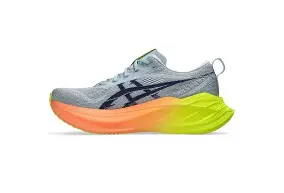
In my experience, moving from a standard wearable to the Superblast 2 Paris felt like moving from a reliable sedan to a precision-engineered sports car. You don't necessarily need the extra performance and the fancy materials for your daily commute, but once you've experienced how much more responsive and "connected" it feels, it’s incredibly difficult to go back. If you have the budget and you value the intersection of high-end engineering and actionable data, this is likely the best electronic investment you can make this year. It stands as a testament to what happens when a company focuses on the tiny details that most users wouldn't notice until they are gone.