Jbuds Air Truly Wireless Review: Real User Experience After 3 Months
I've spent the last three months using the Jbuds Air Truly Wireless as my daily earbuds — commuting, working from coffee shops, doing calls, and exercising. I bought them, carried them in a pocket, tested battery life across several days, and put them through the small annoyances and conveniences that show up only after regular use. This review is an honest account of what I liked, what bothered me, and who I think these earbuds are actually best for.
Why I picked the Jbuds Air
My priorities were straightforward: a compact case, reliable Bluetooth for phone calls, decent sound for podcasts and some music, and a price that didn't demand babying the pair. I wasn't looking for premium noise cancellation or audiophile-grade fidelity — just a solid everyday pair that wouldn't die during commutes. The Jbuds Air fit that bill on paper, so I decided to give them a proper real-world test.
What I tested and how I used them
Over three months I used the Jbuds Air in the following ways:
- Daily commute (45–60 minutes round-trip), paired with an iPhone and an Android phone interchangeably.
- Several conference calls and phone calls in noisy environments (city streets, cafes).
- Walking, light jogging, and home workouts to test fit and sweat resistance.
- Long listening sessions for podcasts, lo-fi playlists, and a few upbeat tracks to test bass response and clarity.
- Battery cycling: tracking single-charge run time and how many full recharges the case delivered before I put the case on its charger.
First impressions — unboxing and build
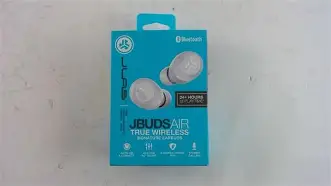
The Jbuds Air come in a compact charging case that's light and rounded. I liked that right away — it slips into a front pocket without creating a noticeable bulge. The case finish picked up a few light scuffs after weeks in my pocket, which surprised me a little given how careful I try to be, but nothing that affects function.
The earbuds themselves are small and low-profile. They felt lighter than some competing models I've used, which made them comfortable for long listens. The unit I have uses simple physical controls (a pressable button on each bud) rather than sensitive touch panels. In my experience, that decision reduced accidental inputs when I adjusted them, but the buttons require a firmer press than you'd expect. That was occasionally awkward when I was jogging and trying to skip a track quickly.
Fit and comfort
Fit was one of the strongest points for me. The Jbuds Air came with multiple silicone tip sizes; I settled on the medium tips and got a snug seal that was comfortable over multi-hour sessions. They didn't dig into my ears, and I could fall asleep with them on the couch without discomfort. During light exercise they stayed put. With more aggressive running I had to readjust once in a while, but nothing dramatic.
One thing I noticed: the charging stems are short, and the earbuds don't protrude very far. That helped keep them from catching when I put on a hood or leaned back against a seat. If you have very shallow ear canals, try the smallest tips first — the compact shape is likely to fit better than bulkier models.
Sound quality — what I actually heard
In my listening sessions, I found the Jbuds Air to have a pleasant, balanced sound for spoken-word content and most casual music listening. Specifically:
- Vocals and podcasts: Clarity was very good. Voices came through clean and natural, which is why I used these a lot for podcasts and long calls.
- Bass: There is bass presence — enough to make pop and electronic music enjoyable — but it's not overpowering. If you’re a basshead who wants chest-thumping low end, these won’t replace a dedicated bass-focused model.
- Mids and highs: The mids are upfront and pleasant; highs are clear without sibilance in my experience. I did notice that complex, layered songs (dense orchestral tracks or highly produced electronic tracks) could sound a bit compressed and lose some micro-detail compared to pricier true wireless options.
- Soundstage: Like most in-ear true wireless buds, the soundstage is intimate rather than expansive. For personal listening and commuting it was perfectly fine, but I wouldn’t expect immersive spatial effects.
Overall, I appreciated how forgiving the tuning was. It made these earbuds versatile: great for long spoken-word listening sessions and enjoyable for casual music listening.
Battery life and charging
Battery performance is one of those things that only reveals itself over time. After several charge cycles I consistently got about 3 to 3.5 hours of continuous playback per earbud on a single charge when listening at moderate volume (around 60–70%). That was slightly less than I hoped for, but the case gave me roughly two full recharges before I had to plug it in — enough to take me through a full day if I charged the case overnight every other day.
Charging the case was straightforward. My unit came with a short charging cable, and charging the case from empty to full took a couple of hours. There is no wireless charging feature on my unit, so factor that in if you prefer that convenience.
Connectivity and call quality
Bluetooth pairing was simple and stable for the most part. I paired them with both an iPhone and an Android device and didn't experience pairing glitches after the initial setup. I did notice occasional audio dropouts in very crowded Wi-Fi/Bluetooth environments (heavy commuter trains or busy conference halls), but these were rare and transient.
Looking for the best Audio & Headphones deals on Amazon?
Shop Amazon →Call quality was adequate. On quiet streets and indoors the person on the other end told me I sounded clear. In windy or very noisy environments my voice sounded more distant and a little muffled — not terrible, but noticeable. If making professional calls in noisy places is a frequent requirement, you may want something with a more robust microphone array or active noise reduction tuned for calls.
Controls and usability
I used the physical buttons as my primary control method. The button presses reliably performed play/pause, track skip, and call controls once I learned the patterns. The downside was that I needed to press the buttons more firmly than I expected, and that sometimes made me tug the earbuds out of the ear slightly, which can be annoying during a run.
There were no overly smart gestures or advanced touch pads, which in a way kept things predictable. If you prefer simple, tactile feedback over touch gestures that misfire, you'll likely appreciate this design choice.
Durability and daily wear
After three months of daily pocket carriage and regular use, the Jbuds Air still work as expected. The case has a few cosmetic scratches and the matte finish shows handling marks under harsh light, but there are no functional issues. The earbuds themselves show light signs of wear but remain snug and clean with regular tip hygiene.
On sweat resistance, I used them for workouts and light jogging and experienced no problems. I wouldn't soak-test them, and I avoid heavy exposure to rain, so I can't vouch for high-level water resistance. In my practical use, they survived sweat and occasional light drizzle without issue.
Where these earbuds surprised me
I was pleasantly surprised by how well they handled long-form spoken content. I sometimes listen to multi-hour interviews and lectures, and the Jbuds Air remained comfortable and retained vocal clarity even after extended sessions.
I was also surprised by how forgiving they were in noisy cafés: while they don't have active noise cancellation, their passive isolation plus the mid-focused tuning made dialogues easy to follow during ambient noise.
Where they fell short
Two main disappointments for me:
- The battery per earbud could be better. Three to three-and-a-half hours is workable but not great compared to newer models advertising longer true-wireless runtimes.
- The controls are reliable but require a firm press. That occasionally pulls an earbud a little out of position, which is frustrating during quick on/off interactions.
Pros & Cons
- Pros:
- Comfortable, low-profile fit for long listening sessions.
- Clear mids and vocal clarity — excellent for podcasts and calls in quiet to moderate noise.
- Lightweight charging case that fits easily in a pocket.
- Simple, predictable physical controls (fewer accidental inputs).
- Durable enough for daily carry and occasional workouts.
- Cons:
- Battery life per earbud is modest compared to more recent competitors.
- Physical buttons require firm presses and can tug slightly during use.
- No built-in active noise cancellation — passive isolation only.
- Case finish shows light scuffs after regular pocketing.
How Jbuds Air compares to a few alternatives
Below is a quick comparison table to place the Jbuds Air in context with a common mainstream option and a typical budget true wireless model. These are general comparisons based on what I experienced and common expectations for those categories.
| Feature | Jbuds Air (my experience) | Apple AirPods / Mainstream True Wireless | Typical Budget TWS |
|---|---|---|---|
| Sound signature | Balanced, vocal-forward, mild bass | Clear vocals, polished tuning, often brighter highs | Variable; sometimes boomy bass, less detail |
| Battery (per earbud) | ~3–3.5 hours observed | ~4–6 hours (depending on model) | ~3–5 hours |
| Case recharges | About 2 full recharges | Often 3+ recharges | 1–3 recharges |
| Fit & comfort | Low-profile, comfortable for long wear | Varies; many have universal fit and good comfort | Varies widely |
| Controls | Physical buttons (tactile, firm press) | Touch or physical depending on model; generally refined | Sometimes unreliable touch controls |
| Noise cancellation | Passive isolation only | Some models offer ANC | Usually no ANC |
| Best for | Everyday podcast listeners and casual music fans on a budget | Users wanting ecosystem features and polished experience | Buyers on tight budgets who need basic TWS functionality |
Buying guide — what to consider before you buy
If you're considering the Jbuds Air, here are the practical points to weigh based on how I used them:
1. Listening priorities
Decide if your main use is spoken-word content (podcasts, audiobooks, calls) or if you prioritize deep, impactful music with heavy bass. In my experience, the Jbuds Air excel at speech clarity but are not bass-first earbuds.
Discover deals on Audio & Headphones — updated daily.
Browse Now →2. Battery expectations
If you need long continuous listening — for example, long-haul flights or full-day conference coverage without recharging — the modest single-earbud runtime may be limiting. However, if you can charge the case occasionally, the total daily runtime is workable.
3. Controls and usability
Think about how you like to control playback. I prefer tactile buttons because they reduce accidental inputs; but be prepared to press a little harder than you might expect with these.
4. Fit and comfort
Try to test different ear tip sizes if you can. The compact shape was comfortable for me, but ear shapes vary. The low-profile design helps with comfort and when wearing hats/hoods.
5. Call quality
For office and casual calls, the microphone performance was adequate. If most of your calls happen outdoors in wind or very noisy environments, look for earbuds specifically marketed for strong call performance.
6. Durability and daily life
If you pocket items frequently, expect light cosmetic wear on the case. Functionality held up for me across daily use and workouts, but I would avoid exposing them to heavy rain or immersion.
Who should buy the Jbuds Air?
In my experience, the Jbuds Air are a strong choice if:
- You want an affordable, comfortable pair of true wireless earbuds primarily for podcasts, calls, and casual music.
- You value reliable, predictable buttons over touch gestures.
- You carry earbuds in your pocket daily and want a compact case that won’t weigh you down.
They are less suitable if:
- You need long single-session battery life without recharging.
- You require active noise cancellation or top-tier call quality in very noisy outdoor environments.
- You want the deepest bass or the most detailed high-end audio reproduction.
Practical tips from my three months of use
- Clean the ear tips and charging contacts weekly. I found that regular quick wipes kept the fit and charging consistent.
- Carry the short charging cable in a small pouch. It’s easy to forget and inconvenient to replace on the go.
- Use the physical buttons for play/pause and track changes — they’re more reliable than trying to use accidental brush gestures while walking.
- If you plan long phone calls, move to a quieter spot when possible — the mic is good, but noisy winds make a difference.
- Store the case in a pocket with a soft liner if you want to minimize surface scuffs.
Final verdict — my honest take
After three months, I still reach for the Jbuds Air when I want a simple, no-fuss pair of earbuds that sound good for speech and everyday music. They're comfortable, pocket-friendly, and hold up to daily handling. The compromises — mainly battery runtime and slightly stiff controls — are real but not dealbreakers for my use case. If your priorities align with mine (comfort, speech clarity, and value), these are a solid choice. If you need the longest possible battery life, active noise cancellation, or studio-level audio fidelity, you'll want to look at higher-tier models.
Overall, what I found was a dependable, sensible pair of true wireless earbuds that suit everyday life without pretending to be flagship devices. They've earned a place in my rotation, and I feel comfortable recommending them to friends who want reliable, comfortable earbuds for daily listening.