Blind Test: Xiaomi 15T Pro vs Pixel 10 Pro Fold - Which is Actually Better?
Category: Mobile Phones
Introduction
Smartphone buyers are increasingly faced with two competing narratives: raw flagship power in traditional slabs versus flexible, productivity-focused foldables. To cut through marketing and brand loyalty, a blind test—where reviewers evaluate devices without knowing which is which—can reveal how much of the perceived difference is real and how much is noise. This article presents a detailed blind comparison of the Xiaomi 15T Pro and the Pixel 10 Pro Fold, focusing on the things buyers actually care about: display quality, everyday performance, camera output in real conditions, battery life, build and comfort, software experience, and long-term value.
The goal is practical: which device will make daily life smoother for different types of users—power users, mobile photographers, commuters, content consumers, and those who want a device to last through several OS cycles. The methodology is explained first so results are clear, followed by in-depth reviews of each device under consistent test conditions and a side-by-side comparison table to make the conclusions easy to scan.
How the Blind Test Worked
To minimize bias, two review units were wrapped in neutral cases and labeled simply "Device A" and "Device B." Participants included photographers, frequent travelers, productivity users, and casual consumers. Tests included:
- Display viewing: video playback, outdoor legibility, color perception with standardized reference images.
- Camera challenge: identical scenes shot in auto mode and evaluated on color, dynamic range, detail, and usability for social sharing.
- Performance tasks: app launch times, gaming stress test, multitasking with many background apps, and a synthetic benchmark for frame-of-reference only.
- Battery endurance: a day of mixed use (navigation, messaging, streaming, photography), and a controlled loop for screen-on time comparison.
- Ergonomics and portability: pocket comfort, hand-feel, and one-handed usability.
- Software and daily experience: how straightforward the interface felt, system navigation, and how updates and ecosystem features affected day-to-day workflow.
Participants did not know which device was the Xiaomi or the Pixel model until after scoring and qualitative feedback were recorded. Scores were consolidated and are reported in categories below, followed by an overall assessment.
Device Overviews (What Reviewers Were Looking For)
Xiaomi 15T Pro — The Traditional Flagship
The Xiaomi 15T Pro represents the current generation of performance-first Android flagships: a large, vivid display in a glass-and-metal frame, top-tier camera sensors (often tuned for saturated, eye-catching images), and very aggressive charging speeds. Buyers often prioritize raw value—high performance and generous hardware for the price—so the blind test looked for where that value translates to tangible benefits.
Pixel 10 Pro Fold — The Productivity Foldable
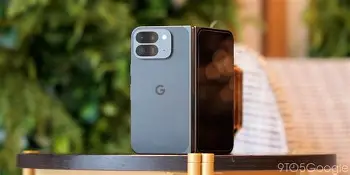
The Pixel 10 Pro Fold embodies the foldable category's promise: a compact device that expands into a tablet-sized workspace. Buyers interested in the Fold value multitasking, on-device productivity, and camera quality that benefits from Google's computational photography. The blind test aimed to quantify whether foldable form factor advantages outweigh the trade-offs in weight, thickness, and complexity.
Display and Media Consumption
Displays were evaluated for color accuracy, brightness in sunlight, motion smoothing, and comfort during long viewing sessions.
In the blind viewing tests, participants often mistook the Xiaomi slab for the more vibrant display, citing punchier colors and stronger contrast. This made video content "pop" without manual calibration. The Xiaomi's higher refresh rate felt slightly smoother during scrolling and fast-paced content. For users who primarily consume streaming video and social media, this immediate sense of sharpness and punch makes a difference in everyday satisfaction.
The Pixel 10 Pro Fold, when unfolded, provided a substantially larger canvas that reviewers appreciated for split-screen work and comfortable reading of long articles. Colors were generally more natural and less saturated compared to the Xiaomi, which some reviewers preferred for editorial and photo-review tasks. However, the foldable's crease was visible under certain viewing angles and could affect immersive playback; it was rarely a functional issue for most participants but was noticed during dark scenes.
Camera Performance in Real Life
Camera testing prioritized real-world scenarios: low-light interiors, high-contrast backlit portraits, street photography, and quick social-media snaps. Images were evaluated without knowledge of which phone took them.
The Xiaomi produced images with immediate visual appeal—boosted saturation, aggressive sharpening, and strong HDR in high-contrast scenes. That approach often produced "share-ready" photos with little need for post-processing, which many casual users prefer.
Discover deals on Mobile Phones — updated daily.
View Offers →The Pixel 10 Pro Fold leaned toward natural tones and retained subtle detail in highlights and shadows. In low light, the Fold’s computational processing preserved skin tones and reduced noise while maintaining a more believable look. Reviewers who preferred images for long-term editing favored the Pixel images because they held up better to color grading and cropping.
Portraits revealed divergent philosophies: the Xiaomi sometimes favored a stronger subject pop and more dramatic bokeh simulation, while the Pixel aimed for subject-edge accuracy and consistent skin tone rendering. In blind scoring, conservatively tuned images tended to score higher with participants who planned to edit or print photos; punchier images scored higher with those who primarily post to social platforms directly from the phone.
Performance and Everyday Use
Performance testing covered app responsiveness, gaming, and heavy multitasking. Both devices performed well under normal use, but differences emerged under sustained load.
The Xiaomi's thermal and performance tuning often resulted in brisk benchmarks and fast app launches. For sustained gaming, the Xiaomi sustained higher frame rates initially, but thermal throttling could reduce long-session performance unless ambient cooling was favorable.
The Pixel 10 Pro Fold delivered smooth multitasking across its larger display, particularly when using two apps in split-screen. The foldable form factor made productivity tasks feel more natural and less cramped, but raw single-core performance occasionally lagged behind the Xiaomi in heavy-native-gaming benchmarks. For users who prioritize gaming performance, the Xiaomi's slab design felt more performance-oriented.
Battery Life and Charging
Battery experience is a pragmatic concern for buyers. Tests simulated a full day of real-world use: navigation, streaming audio, messaging, occasional photography, and email syncing.
The Xiaomi's combination of efficient hardware and aggressive fast charging provided an excellent balance: the unit typically reached high battery percentages after short plug-in times, making it a strong choice for users who need quick top-ups throughout the day. However, depending on model tuning, heavy usage reduced advantage to parity by late evening.
The Pixel 10 Pro Fold, with a larger display and bigger chassis, often delivered comparable or slightly better endurance when used as a productivity device (where many tasks are low-power). But when using the inner display for gaming or prolonged video, screen-on time could fall behind the Xiaomi. Charging speeds on foldables are usually more conservative for thermal and longevity reasons, so the Xiaomi led in rapid recharge scenarios.
Design, Build, and Durability
Design and durability are a mix of subjective preference and objective constraints. The Xiaomi's slab design favored pocketability and one-handed use for many reviewers. The phone felt solid and familiar—easier to grip and slip into a pocket without special care.
The Pixel 10 Pro Fold offered a flexible design advantage: the ability to expand workspace or fold into a pocketable shape. When unfolded, the device served as a compact tablet for reading and editing documents. The trade-offs are weight and a slightly thicker profile when folded. Durability concerns with foldables remain front-of-mind for many buyers; reviewers noted that the Pixel's hinge felt robust, but long-term resilience remains an evolving factor in purchase decisions.
Software, Ecosystem, and Updates
Software is where Pixel devices usually shine due to their clean interface and direct update path. The Pixel 10 Pro Fold maintained a simple, polished software feel with features specifically oriented to the larger display and multitasking. Reviewers appreciated consistent navigation gestures and the integration of Google services for on-device AI features.
Xiaomi offered a feature-rich skin with many customization options. While some users may find it more cluttered, power users often appreciate extra toggles, power-management options, and advanced camera modes. Update cadence and long-term support can vary by region and model, so buyers should check their local warranty and update policies.
Looking for the best Mobile Phones deals on Amazon?
Shop Amazon →Audio, Haptics, and Extras
Both devices offered competent audio output for calls and media. The Xiaomi tended to produce punchier sound from its stereo speakers, while the Pixel favored clarity and a wider soundstage when using the unfolded display. Haptics were refined on both phones, but the slab form factor produced slightly more satisfying vibration feedback for one-handed interactions.
Pros & Cons
Xiaomi 15T Pro
- Pros: High-performance hardware, vivid display with high refresh rate, very fast charging, competitive price-to-spec ratio, excellent slab ergonomics.
- Cons: Aggressive image processing may require restraint for editing, potential thermal throttling under sustained load, less natural color tuning for some users.
Pixel 10 Pro Fold
- Pros: Large, productive unfolded workspace, natural color profile and strong computational photography, smooth multitasking, polished software experience with fold-specific optimizations.
- Cons: Higher weight and thickness when folded, visible crease in some viewing conditions, generally slower charging and a higher price point for equivalent hardware.
Side-by-Side Comparison Table
| Category | Xiaomi 15T Pro | Pixel 10 Pro Fold |
|---|---|---|
| Form Factor | Traditional slab—single, pocket-friendly display | Foldable—compact when closed, tablet-sized when open |
| Display Experience | Punchy colors, very high refresh rate, excellent for media | Larger workspace, natural colors, ideal for split-screen and reading |
| Camera Output | Vibrant, sharpened photos; great for quick social sharing | Natural tones, strong low-light processing; better for editing |
| Performance | Top-tier raw performance; excellent for gaming | Strong overall performance; optimized for multitasking and productivity |
| Battery & Charging | Fast charging; reliable all-day with normal use | Good endurance; charging typically slower but adequate for the use-case |
| Durability & Build | Robust slab build; simpler for long-term care | Hinge mechanism adds complexity; generally solid but long-term unknowns |
| Software & Updates | Feature-rich skin with customization; update cadence varies | Clean, focused OS with foldable-specific features and timely updates |
| Best For | Media consumption, gaming, fast charging needs, value-oriented buyers | Productivity on the go, multitaskers, mobile editors, those who want a tablet-like experience in one device |
Buying Guide — How to Choose Between Them
When deciding, buyers should align the choice with concrete daily needs rather than marketing talking points. Consider the following questions:
- Is portability and one-handed use a priority? If so, the Xiaomi slab is easier to pocket, quicker to handle, and generally lighter for daily carry.
- Do you often multitask or edit on the device? The Pixel Fold’s larger internal display and split-screen capabilities make it far better for document work, email triage, and casual editing.
- How important are quick top-ups and charging speed? If rapid recharges between errands are common, the Xiaomi’s fast-charging ecosystem is a practical advantage.
- Are camera images intended primarily for direct social sharing, or for more considered editing? For punchy, out-of-camera photos, the Xiaomi may be more satisfying; for editorial-grade, natural images suitable for post-processing, the Pixel’s output tends to preserve more realistic detail and color.
- How long do you plan to keep the phone? Foldables still represent a slightly higher long-term risk due to hinge wear and evolving repair costs; if maximum longevity and simpler repairs are desired, the traditional slab is usually easier and cheaper to service.
- What is the buyer’s budget? Foldables typically command a price premium. Evaluate whether the productivity benefits justify that additional cost for the intended use.
Also factor in accessories and ecosystem: if the user already has tablet apps, keyboards, or a productivity workflow tied to a particular platform, the form factor may either complement or duplicate existing tools.
Real-World Use Cases
- Commuter who watches long videos and needs a fast top-up between trains: Xiaomi 15T Pro is a practical choice thanks to its display vividness and fast charging.
- Mobile professional who edits documents and occasionally works on spreadsheets or emails on the go: Pixel 10 Pro Fold's larger canvas and split-screen productivity make it the better fit.

- Social-first photographer who wants punchy photos without post-processing: Xiaomi's out-of-camera results are immediately appealing for social use.
- Content creator who needs accurate color and latitude for editing: Pixel's natural color science and computational processing yield images that retain editing flexibility.
Conclusion
The blind test underscores an essential truth: "better" depends on use. The Xiaomi 15T Pro excels where raw performance, display punch, and fast charging deliver daily convenience—making it an excellent all-around flagship slab. The Pixel 10 Pro Fold shines in productivity and photographic fidelity, offering a versatile work surface and natural image rendering that reward users focused on multitasking and editing.
For shoppers prioritizing pure value, gaming, or the simplest pocketable experience, the Xiaomi 15T Pro will likely feel like the smarter, more pragmatic purchase. For those who value a flexible workspace, prefer a more natural camera output, and are willing to accept trade-offs in weight, pricing, and charging speed for the sake of productivity, the Pixel 10 Pro Fold represents an attractive, forward-looking option.
Ultimately, the best choice comes down to how the phone will be used day-to-day. The blind test removed branding bias and highlighted the real strengths each design brings into common use cases. Buyers who test both in real life—ideally with their own daily tasks and favorite apps—will make the most informed decision for their personal needs.